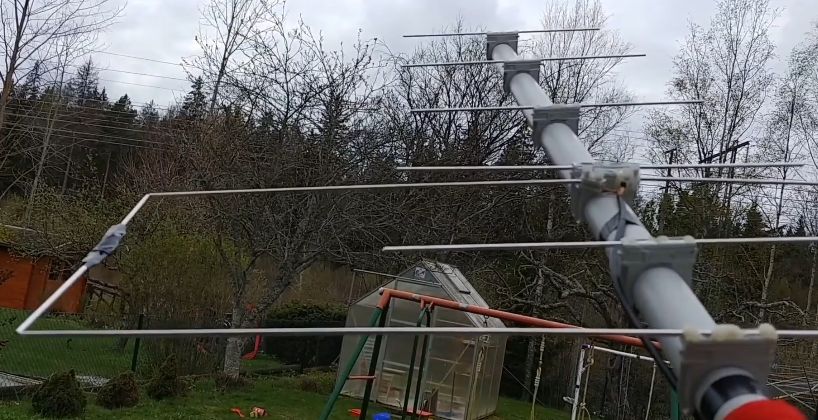
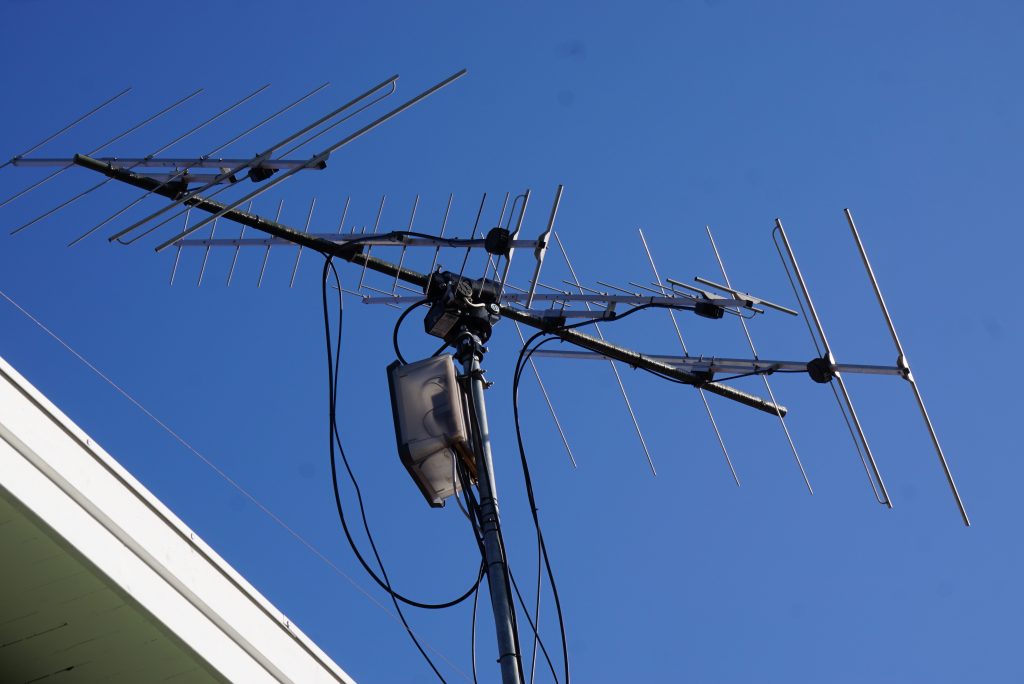
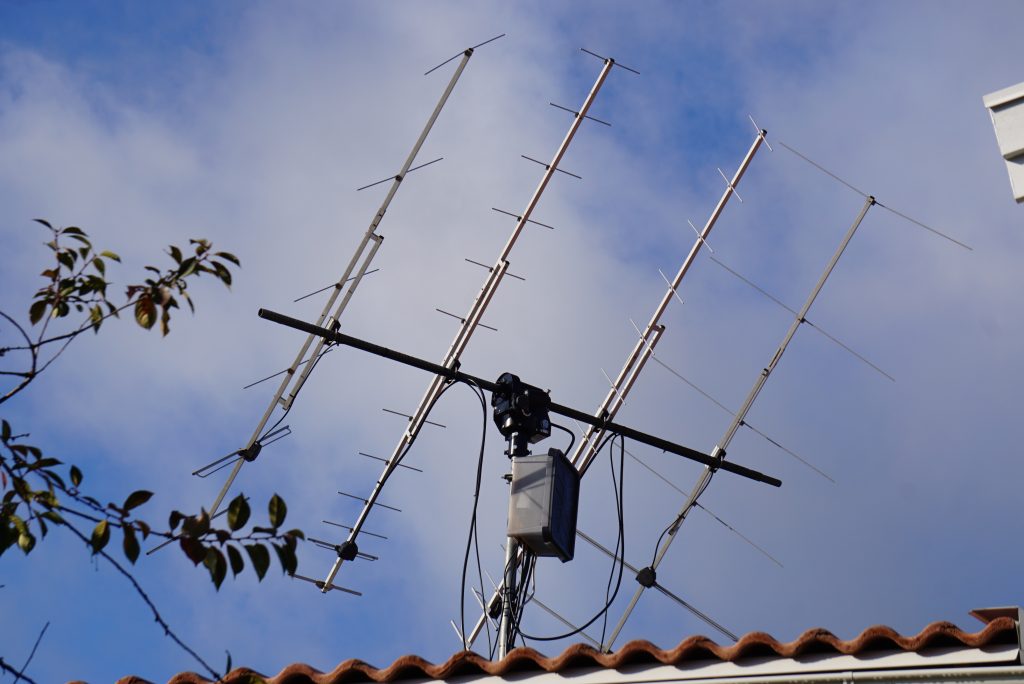
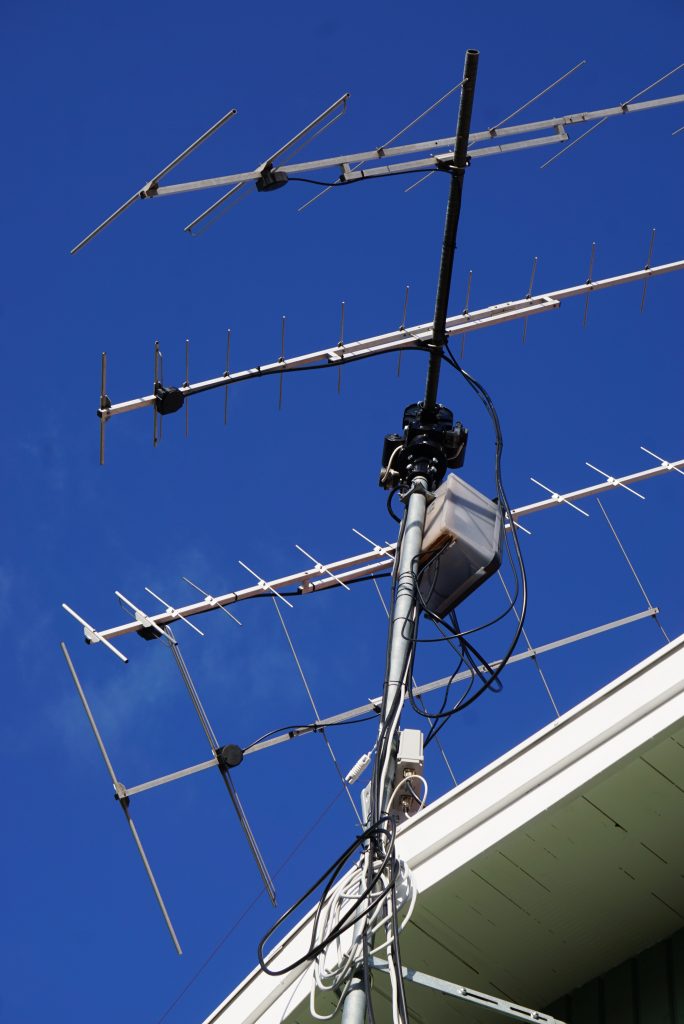
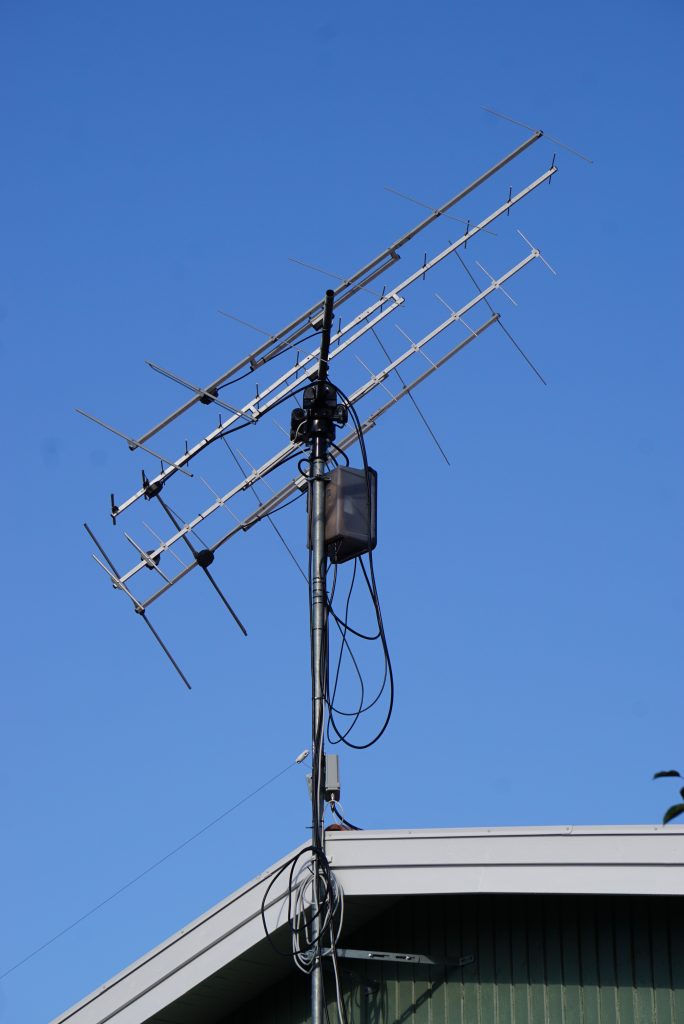
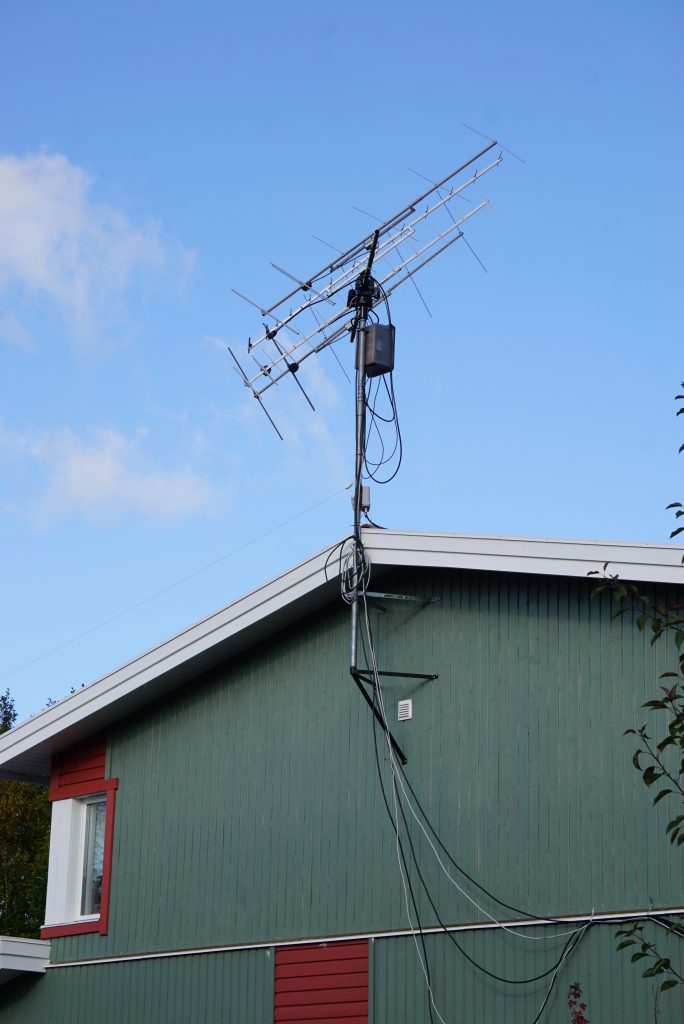
Some pictures of the new installation of the Vårgårda Yagis in september 2019.
2 x 6 el VHF yagis with switchable circular polarization. Mounted in 45 degree angle.
2 x 13 el UHF yagis. One vertical and one horizontal. Switchable.


Blogs and posts about my amateur radio and satellite projects. Most posts are in english.
Some pictures of the new installation of the Vårgårda Yagis in september 2019.
2 x 6 el VHF yagis with switchable circular polarization. Mounted in 45 degree angle.
2 x 13 el UHF yagis. One vertical and one horizontal. Switchable.


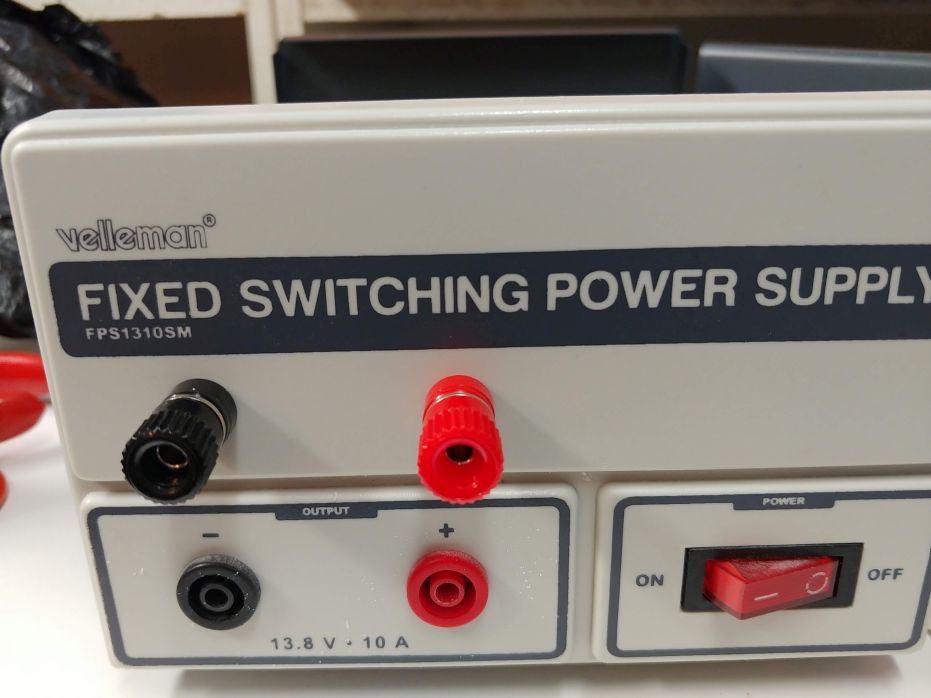
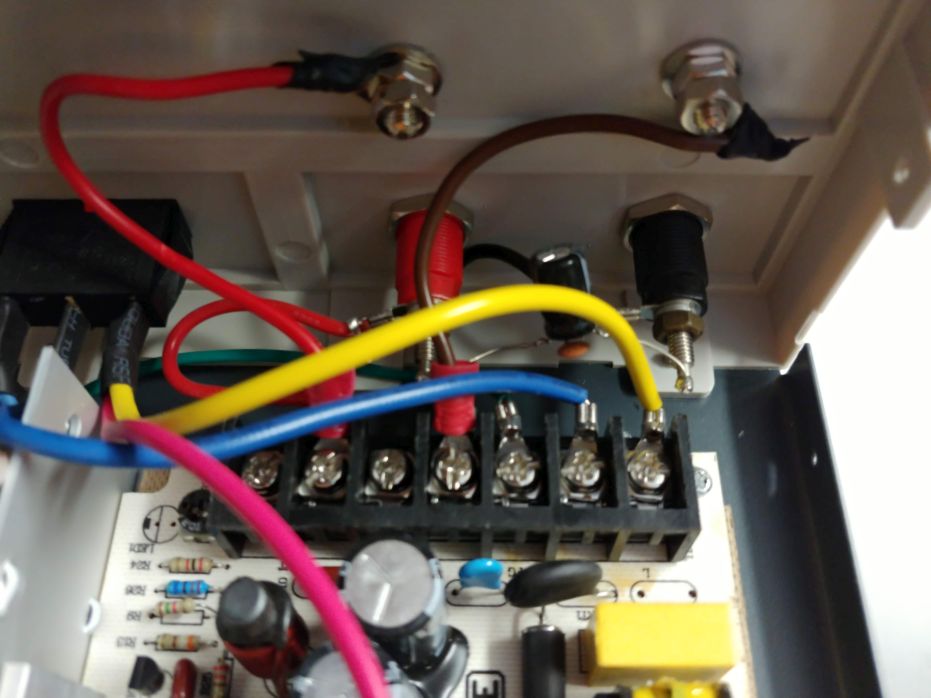
I have a simple 13.5V PSU from Velleman, works OK and seems it has low RF noise. But it only has one connection terminal, 4 mm banana plugs. I started looking for a terminal connection board but the prices was very high.
So I did a very simple mod, I just drilled two holes in the front panel and mounted two extra 4mm banana plus and connected internal to the same connections points.


This year, 2019, I have been a ham radio operator for 30 years!
After some ”not so good attempts” making a EFHW trafo I made a new one with a real FT240-43 Amidon Toroid. I followed this guide:
Construction transformer: https://vk3il.net/projects-antenna/efhw-matching-unit/
This is the transformer in a waterproof box:

The measurements with a 5 kohm resistor (yes I know it’s a little to high impedance) gave the following result with my antenna analyzer:

And after adding a Sotabeams wire (https://www.sotabeams.co.uk/antenna-wire-lightweight-100m/ ) and cutting it to resonate on 7 MHz (40 meter) I got the measurement below. The wire was very low over ground, just 2 meter. I did not measure the exact length of the wire.
It is very good on 40 m but I can not get the SWR under 3.0:1 at 20 m and 15 m. This is no problem as I will run this antenna with a remote tuner from LDG. It seems that I can use this antenna on 80 m also…
What I understand is that some commercial antennas use some kind of loading coil to make it resonate on higher bands.

Below is the measurement with the wire mounted from the roof to a tree in the garden. As you can see it is much better at higher level above ground and even possible to use at 80m! It can be used without tuner on 40m (SWR 1.5:1). Resonance for 20m and 15m is to high

When using a LDG remote tuner RT-100 it is no problem using all HF bands. Below are some pictures after mounting. I will probably make a better setup later at some other place on the roof of the house.


Updated 2019-12-31
New mounting at roof for trafo and tuner:

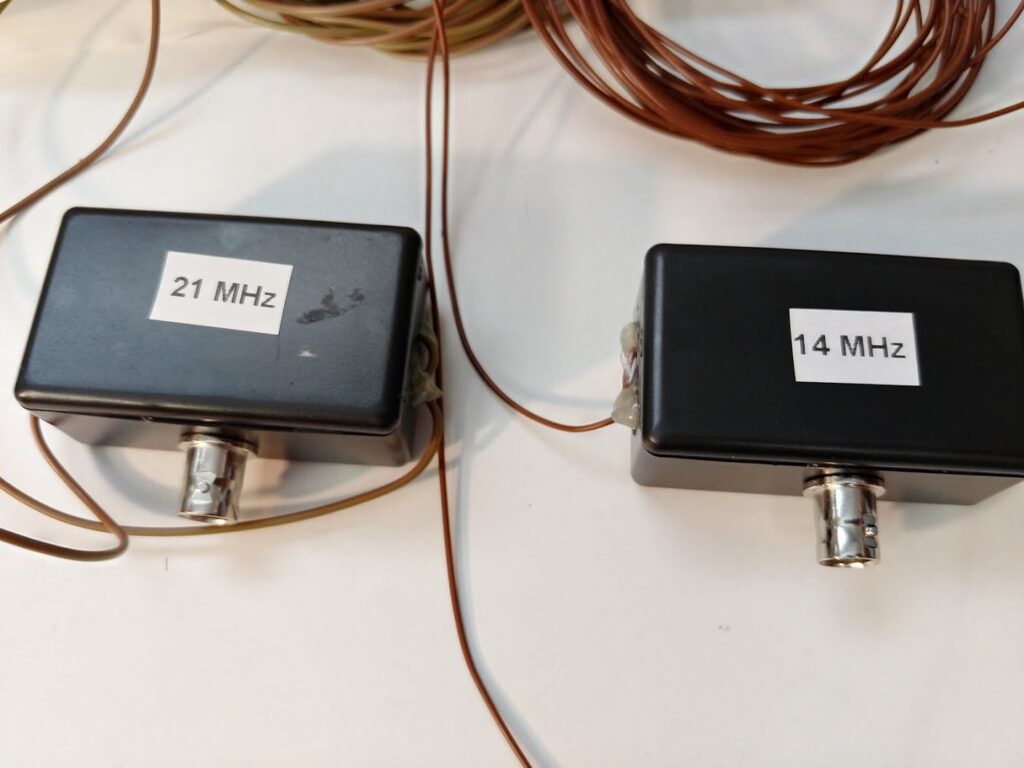
Some time ago I made attempt to make an UNUN / EFHW (End Fed Half Wave) trafo for 14 MHz, it was a complete failure… I do not know if the cheap toroid ordered from eBay was a fake (T106-2) but nothing worked (high SWR).
Then I ordered the Sotabeams Pico Tuner (at a very good price). It took me about 3 hours to solder the tuner and cut, test an antenna for 14 MHz (20 meter band). The SWR was very good with the antenna at almost ground level.

The first test with FT8 digital mode and my FT-817ND was good. The next day I mounted the antenna on the roof with one fixed end of the antenna in one of the few low trees I have at my garden. The SWR was now a little bit different (higher) but bandwidth was larger.


I noticed a large improvement in both RX and TX when putting the antenna higher up. In just one hour my TX was heard by 51 receivers on FT8 with 2.5 watts from my FT-817ND.

Summary: I can highly recommend the Sotabeams Pico Tuner if you need a simple QRP tuner thats actually works. Also FT8 is a great digital mode for testing antennas and fast QSOs.
So I did try again with a homemade 9:1 UNUN and a 10 m wire to see if I could use it as a simple 14 MHz antenna. But no success… I actually had the best SWR high up on the HF bands.
The toroid is was a T106-2 and what I can see this is not suited for HF UNUNs…
Next I will maybe try one of the SOTA Beam antenna designs (pico-traps, EFHW tuners…).
On internet there are many articles about using a PC headset for ham radio transceivers. I have been using this one from KC2RGW, Chris Esser for connecting a simple PC headset to my FT-817ND. The circuit is according to following (picture from Chris):
And here it is after some soldering:
And after some vulcanized tape:
Audio result from FT-817ND:
So I think I’m now a little bit closer to be able to make satellite portable QSO when I can use a headset with VOX.